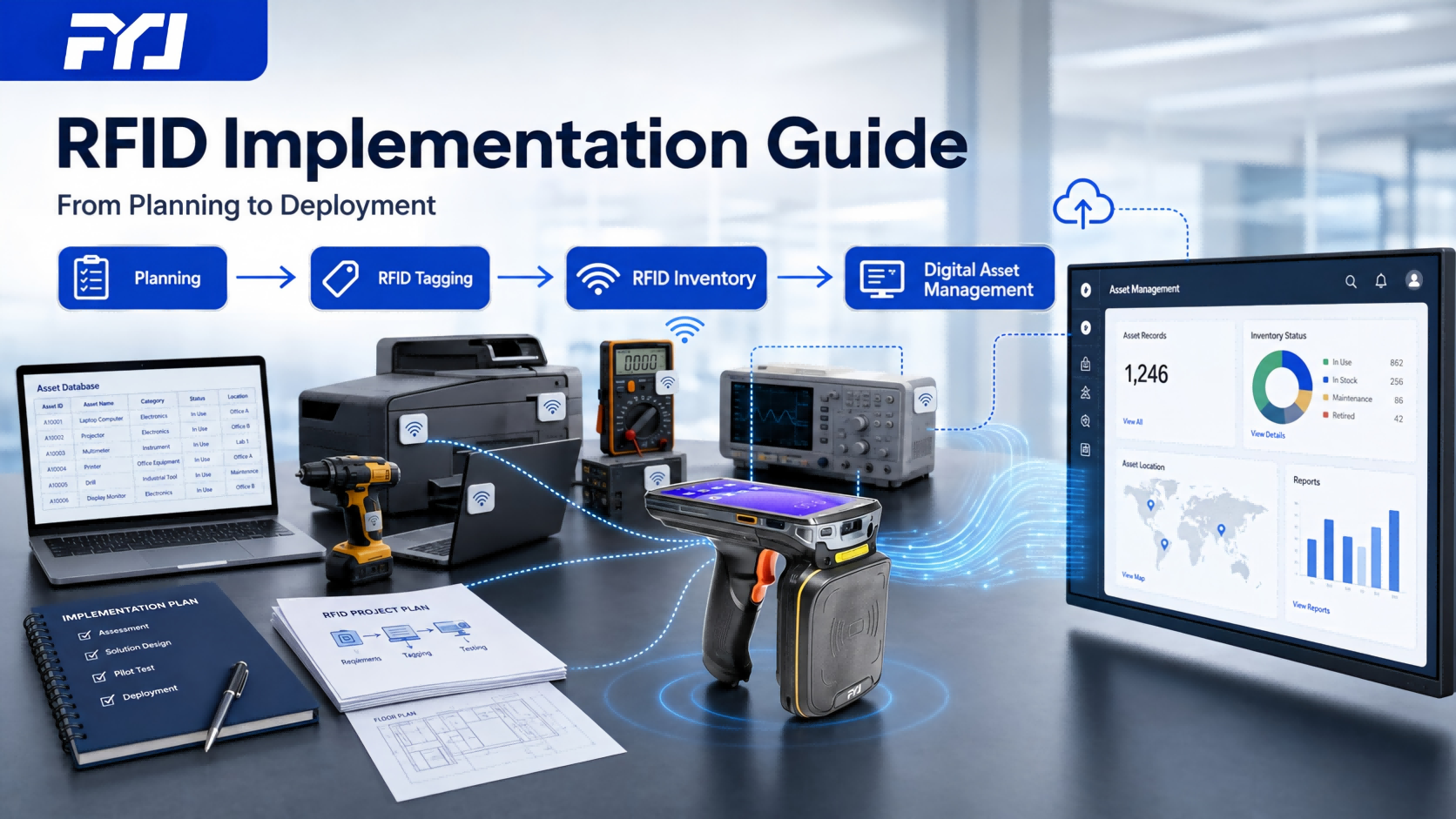
دليل تنفيذ تتبع الأصول بتقنية RFID: من التخطيط إلى النشر (2026)
Jul 24, 2026
إجابة سريعة
إن تطبيق نظام تتبع الأصول بتقنية RFID لا يقتصر فقط على إرفاق علامات RFID وتثبيت قارئات RFID.
إن التكنولوجيا نفسها ليست سوى جزء واحد من المشروع.
يتضمن نشر تقنية تحديد الهوية بموجات الراديو (RFID) بنجاح عادةً ما يلي:
فهم عمليات إدارة الأصول الحالية
إعداد بيانات الأصول بدقة
تصميم سير العمل المناسب
اختيار الأجهزة المناسبة
اختبار النظام في بيئات حقيقية
تدريب المستخدمين
تحسين العمليات بعد الإطلاق
من واقع خبرتنا، فإن العديد من مشاريع تحديد الهوية بموجات الراديو (RFID) لا تفشل لأن التكنولوجيا لا تعمل.
إنهم يواجهون صعوبات لأن التنفيذ يبدأ من المكان الخطأ.
تركز الشركات أولاً على الأجهزة، متجاهلة الأسئلة التي تحدد النجاح على المدى الطويل:
كيف تتم إدارة الأصول اليوم؟
من يستخدم النظام؟
ما هي المشاكل التي تحتاج إلى حل؟
كيف سيدمج الموظفون تقنية تحديد الهوية بموجات الراديو (RFID) في عملهم اليومي؟
يبدأ الحل العملي لتقنية تحديد الهوية بموجات الراديو (RFID) بالعمليات التجارية، ثم يتم تطبيق التكنولوجيا حيثما تخلق قيمة حقيقية.
لماذا تحتاج مشاريع تحديد الهوية بموجات الراديو (RFID) إلى أكثر من مجرد تركيب الأجهزة؟
عندما تبدأ الشركات بتقييم تقنية تحديد الهوية بموجات الراديو (RFID)، غالباً ما تدور المناقشات الأولى حول المعدات.
يسألون:
أي قارئ RFID يجب أن نختار؟
ما هي مسافة القراءة؟
أي بطاقة أرخص؟
كم عدد الأجهزة المطلوبة؟
هذه الأسئلة مهمة.
ومع ذلك، فهي عادة لا تمثل نقطة البداية لتنفيذ ناجح.
يربط نظام تحديد الهوية بموجات الراديو (RFID) ثلاثة أجزاء مختلفة:
الأصول المادية
المعدات والأدوات والأجهزة والمواد التي تحتاج إلى إدارة.
العمليات التجارية
الأنشطة اليومية المتعلقة بتلك الأصول:
تسجيل
تحويل
جرد
الاقتراض
صيانة
يعود
منصة الإدارة الرقمية
البرنامج الذي يخزن المعلومات ويساعد الفرق على إدارة الأصول.
إذا لم تكن هذه الأجزاء الثلاثة متوافقة، فقد يواجه المشروع مشاكل بعد النشر.
قد تمتلك الشركة أجهزة RFID متطورة، ولكن إذا كانت سجلات الأصول غير مكتملة أو استمر الموظفون في استخدام العمليات القديمة، فقد لا يحدث التحسن المتوقع.
قبل النشر: فهم عملية إدارة الأصول الحالية
تتمثل المرحلة الأولى من تطبيق تقنية تحديد الهوية بموجات الراديو (RFID) في فهم كيفية إدارة الأصول حاليًا.
غالباً ما يتم تجاهل هذه الخطوة لأنها لا تتضمن تقنية مرئية.
ومع ذلك، فإنه عادة ما يحدد جودة النظام النهائي.
بحسب تجربتنا، نادراً ما يكون النقاش الأول مع العملاء حول أجهزة قراءة RFID.
يبدأ الأمر عادةً بسؤال أبسط:
كيف تتم إدارة أصولك اليوم؟
يحتاج فريق المشروع إلى فهم ما يلي:
ما هي أنواع الأصول الموجودة؟
كم عدد الأصول التي تحتاج إلى تتبع؟
أين تقع الأصول؟
من المسؤول عنهم؟
كم مرة يتم إجراء الجرد؟
ما هي المشاكل التي تحدث أثناء الإدارة اليومية؟
بعض المنظمات لديها بالفعل سجلات رقمية.
ولا يزال البعض الآخر يعتمد بشكل كبير على جداول البيانات أو السجلات الورقية أو خبرة الموظفين.
تعمل تقنية تحديد الهوية بموجات الراديو (RFID) على تحسين عملية تحديد الهوية والرؤية، ولكنها تعمل بشكل أفضل عندما تكون أسس الإدارة واضحة.
إعداد بيانات الأصول: الأساس قبل بدء تشغيل تقنية تحديد الهوية بموجات الراديو (RFID)
من المفاهيم الخاطئة الشائعة أن تقنية تحديد الهوية بموجات الراديو (RFID) تقوم تلقائيًا بإنشاء معلومات دقيقة عن الأصول.
لا يفعل ذلك.يمكن لتقنية تحديد الهوية بموجات الراديو (RFID) التعرف على الأصول بسرعة، ولكن النظام لا يزال بحاجة إلى معلومات ذات مغزى وراء كل علامة.
على سبيل المثال، يمكن للعلامة أن تخبر النظام بما يلي: تم اكتشاف هذا الأصل.
لكن الإدارة تحتاج إلى المزيد:
ما هو هذا الأصل؟
أي قسم يملكها؟
من المسؤول؟
أين ينبغي أن يكون موقعه؟
ما هو وضعها الحالي؟
ماذا حدث سابقاً؟
قبل النشر، تحتاج الشركات عادةً إلى مراجعة ما يلي:
أسيت ريكوردز
مشتمل:
اسم الأصل
رقم الأصل
فئة
موقع
قسم
معلومات المستخدم
قواعد الإدارة
مشتمل:
الموافقة على النقل
عملية الجرد
أذونات المستخدم
تغييرات الحالة
تُصبح العديد من مشاريع تحديد الهوية بموجات الراديو (RFID) فرصة لتحسين جودة بيانات الأصول.
تكشف هذه التقنية عن مشاكل كانت موجودة بالفعل.
خبرة عملية في مشروع حقيقي: إدارة الأصول بتقنية تحديد الهوية بموجات الراديو (RFID) في مؤسسة رعاية صحية
قامت إحدى منظمات الرعاية الصحية في الصين بإدارة الأصول عبر أقسام متعددة.
قبل تطبيق تقنية تحديد الهوية بموجات الراديو (RFID)، كانت المنظمة تمتلك بالفعل سجلات الأصول الرقمية.
كان التحدي يكمن في الربط بين معلومات النظام والمعدات المادية.
أثناء عمليات الجرد، كان الموظفون لا يزالون بحاجة إلى التحقق يدويًا من المعدات عبر الأقسام المختلفة ومقارنة الظروف المادية بالسجلات الموجودة.
قبل التنفيذ، قام فريق المشروع بمراجعة ما يلي:
فئات الأصول الحالية
متطلبات القسم
إجراءات الجرد
بيئة الشبكة
تضمن الحل ما يلي:
علامات تعريف الأصول بتقنية RFID
جهاز مساعد رقمي محمول بتقنية RFID
برامج إدارة الأصول
إمكانية التشغيل دون اتصال بالإنترنت
لم يكن محور المشروع مجرد إضافة معدات تحديد الهوية بموجات الراديو (RFID).
كان المفتاح هو بناء سير عمل يتوافق مع كيفية إدارة الأقسام المختلفة لأصولها فعلياً.
حدد نطاق المشروع قبل النشر الكامل
أحد الأخطاء الشائعة في مشاريع تحديد الهوية بموجات الراديو (RFID) هو محاولة نشر كل شيء دفعة واحدة.
بالنسبة للمؤسسات الكبيرة، يمكن أن يؤدي هذا النهج إلى تعقيد غير ضروري.
عادةً ما يكون التنفيذ التدريجي أسهل في الإدارة.
يمكن أن يركز المشروع التجريبي على ما يلي:
قسم
فئة أصول واحدة
موقع واحد
سير عمل محدد واحد
ليس الهدف هو اختبار التكنولوجيا فحسب.
وذلك للتأكيد:
ما إذا كان بإمكان الموظفين استخدام النظام بسهولة
مدى توافق سير العمل مع العمليات اليومية
مدى ملاءمة اختيار الأجهزة للبيئة
يساهم نجاح التجربة التجريبية في تقليل حالة عدم اليقين قبل توسيع النظام.
اختبار أجهزة RFID في ظروف حقيقية
ينبغي أن يستند اختيار الأجهزة أثناء التنفيذ إلى بيئات العمل الفعلية.
السؤال ليس:
"ما هو أقوى جهاز RFID؟"
السؤال الأفضل هو:
"ما هي المعدات المناسبة لعملياتنا اليومية؟"
أثناء الاختبار، تقوم الفرق عادةً بتقييم ما يلي:
أداء علامات RFID
يجب أن تعمل العلامة بشكل موثوق على الأصل الفعلي.
قد تؤثر المواد والبيئات المختلفة على الأداء.
على سبيل المثال:
قد تتطلب المعدات المعدنية علامات RFID مضادة للمعادن
قد تستخدم أصول المكتب العام علامات قياسية
قد تتطلب البيئات الخاصة حلولاً مصممة خصيصاً
تشغيل جهاز المساعد الرقمي الشخصي المحمول بتقنية RFID
تُستخدم أجهزة المساعد الرقمي الشخصي (PDA) المزودة بتقنية RFID بشكل شائع في:
جرد الأصول
التحقق من المعدات
العمليات المتنقلة
أثناء الاختبار، يحتاج الموظفون إلى تأكيد ما يلي:
عملية التشغيل
كفاءة القراءة
تجربة المستخدم
تطبيقات قارئات RFID الثابتة
تُعد أجهزة القراءة الثابتة مفيدة عند الحاجة إلى التعرف التلقائي.
تشمل السيناريوهات النموذجية ما يلي:
مداخل خاضعة للرقابة
مناطق المعدات
نقاط حركة محددة
يعتمد التكوين النهائي على كيفية تحرك الأصول في العمليات الحقيقية.
الاختبار التجريبي: اكتشاف المشاكل قبل الإطلاق الكامل
المشروع التجريبي هو المرحلة التي ينتقل فيها نظام تحديد الهوية بموجات الراديو (RFID) من مرحلة التخطيط إلى مرحلة التشغيل الفعلي.
ينبغي إجراء الاختبار باستخدام الأصول الفعلية والمستخدمين الفعليين.
خلال المرحلة التجريبية، تقوم الشركات عادةً بفحص ثلاثة مجالات.
أداء القراءة
تتضمن الأسئلة ما يلي:
هل يتم تحديد العلامات بشكل صحيح؟
هل مسافة القراءة مناسبة؟
هل توجد عوامل بيئية تؤثر على الأداء؟
سير عمل المستخدم
يعتمد تبني التكنولوجيا على التجربة اليومية.
يحتاج الفريق إلى الملاحظة:
كيفية قيام الموظفين بجرد المخزون
هل خطوات التشغيل واضحة؟
ما إذا كان التدريب الإضافي مطلوبًا
عملية البرمجيات
ينبغي أن يؤكد الاختبار أيضاً ما يلي:
إنشاء مهمة الجرد
مزامنة البيانات
الإبلاغ عن الفروقات
نقل السجلات
يمكن أن تمنع التعديلات الصغيرة خلال المرحلة التجريبية حدوث مشاكل أكبر بعد النشر.
تحديد الأصول وبدء تشغيل النظام
بعد اكتمال الاختبار التجريبي، ينتقل المشروع إلى مرحلة النشر.
هذه هي النقطة التي يتحول فيها نظام تحديد الهوية بموجات الراديو (RFID) من حل تم اختباره إلى أداة إدارة يومية.
تتضمن مرحلة النشر عادةً ثلاثة أنشطة مهمة:
تحديد الأصول
التحقق من البيانات
تدريب المستخدمين
تركيب بطاقات تعريف الأصول
قد يبدو تركيب علامات RFID بسيطًا، لكن طريقة التركيب تؤثر على الأداء على المدى الطويل.
ينبغي مراعاة ما يلي عند تحديد موضع الوسم:
أداء القراءة
الاستخدام اليومي
الحماية من التلف
متطلبات الصيانة
على سبيل المثال:
قد تحتاج أداة الإنتاج المستخدمة يوميًا إلى طريقة مختلفة لتثبيت الملصقات عن تلك المستخدمة في أجهزة الكمبيوتر المحمولة المكتبية.
قد يتطلب سطح المعدات المعدنية استخدام علامة RFID مضادة للمعادن وموقع تركيب مناسب.
قد يحتاج العنصر الذي يتم نقله بشكل متكرر إلى حماية العلامة من الاحتكاك أو الصدمات المتكررة.
ليس الهدف مجرد وضع ملصق.
والهدف هو التأكد من أن تحديد الهوية باستخدام تقنية RFID يظل موثوقًا به طوال دورة حياة الأصل.
التحقق من الأصول بعد وضع العلامات
بعد وضع العلامات، يجب مطابقة الأصول المادية مع السجلات الرقمية.
غالباً ما تكشف هذه المرحلة عن مشاكل في البيانات التاريخية.
على سبيل المثال:
يوجد أصل فعليًا ولكنه غير موجود في النظام
يوجد سجل، لكن موقع المعدات غير واضح.
أحد الأصول له سجلات متعددة
تُعد هذه المشاكل شائعة في إدارة الأصول طويلة الأجل.
لا تتسبب تقنية تحديد الهوية بموجات الراديو (RFID) في هذه المشكلات.
هذا ببساطة يجعل اكتشافها أسهل.
يساعد تنظيف هذه المعلومات أثناء النشر على تحسين دقة المخزون في المستقبل.
تدريب المستخدمين واعتمادهم
حتى نظام تحديد الهوية بموجات الراديو المصمم جيدًا يحتاج إلى قبول المستخدمين لسير العمل الجديد.
يركز التدريب عادة على العمليات العملية:
استخدام أجهزة المساعد الرقمي الشخصي المحمولة بتقنية RFID
تنفيذ مهام الجرد
التحقق من معلومات الأصول
معالجة التحويلات
مراجعة اختلافات المخزون
في العديد من المشاريع، يتكيف الموظفون بسرعة بمجرد فهمهم للغرض من النظام.
الهدف ليس إضافة مهمة أخرى.
الهدف هو تقليل العمل اليدوي المتكرر.
أخطاء شائعة في تطبيق تقنية تحديد الهوية بموجات الراديو (RFID) لاحظناها
من خلال مشاريع RFID الفعلية، تظهر العديد من المشاكل بشكل متكرر.
إن فهم هذه المشكلات قبل النشر يمكن أن يوفر الوقت والتكاليف غير الضرورية.
البدء بالأجهزة بدلاً من احتياجات العمل
تبدأ بعض الشركات بمقارنة أجهزة تحديد الهوية بموجات الراديو (RFID) قبل تحديد المشكلة الفعلية.
قد يشترون المعدات أولاً ثم يفكرون لاحقاً في:
من سيستخدمه؟
ما هي آلية العمل التي ينبغي أن يدعمها؟
ما المعلومات التي تحتاجها الإدارة؟
غالباً ما تكون النتيجة نظاماً يعمل من الناحية التقنية ولكنه لا يحل المشكلة التشغيلية بشكل كامل.
يتمثل النهج الأفضل في تحديد هدف الإدارة أولاً، ثم اختيار التكنولوجيا.
اختيار علامات RFID دون اختبار الأصول الحقيقية
يعتمد أداء تقنية تحديد الهوية بموجات الراديو (RFID) على بيئة التطبيق الفعلية.
قد يتصرف الوسم الذي يعمل بشكل جيد في بيئة اختبار بسيطة بشكل مختلف عند تطبيقه على:
معدات معدنية
مناطق تخزين كثيفة
الأدوات الصناعية
مواد خاصة
يمكن أن يؤدي اختبار الأصول التمثيلية قبل النشر على نطاق واسع إلى تجنب العديد من المشكلات.
تجاهل مشاكل البيانات الموجودة
تركز العديد من المنظمات بشكل كبير على أجهزة تحديد الهوية بموجات الراديو (RFID) ولكنها تقلل من شأن إعداد البيانات.
ومع ذلك، فإن المعلومات غير الدقيقة عن الأصول يمكن أن تؤثر على النظام بأكمله.
أمثلة:
مواقع الأصول غير الصحيحة
غياب المستخدمين المسؤولين
سجلات غير مكتملة
تعمل تقنية تحديد الهوية بموجات الراديو (RFID) على تحسين الرؤية، لكنها لا تصحح بيانات الإدارة السيئة تلقائيًا.
توقع استبدال عمليات الإدارة بتقنية تحديد الهوية بموجات الراديو (RFID)
تقنية تحديد الهوية بموجات الراديو (RFID) هي أداة تكنولوجية.
إنه يحسن:
تعريف
كفاءة المخزون
رؤية الأصول
لكنها لا تحل محل:
عمليات الموافقة
إدارة المسؤولية
إجراءات الصيانة
عادةً ما تتحقق أفضل النتائج عندما تدعم تقنية تحديد الهوية بموجات الراديو (RFID) عملية إدارة محسّنة.
الجدول الزمني لتطبيق تقنية تحديد الهوية بموجات الراديو (RFID): كم يستغرق النشر؟
تعتمد فترة التنفيذ على:
عدد الأصول
عدد المواقع
متطلبات البرامج
تعقيد الأجهزة
بيئة النشر
مرجع عام:
مرحلة المشروع
المدة النموذجية
تحليل المتطلبات
من أسبوع إلى ثلاثة أسابيع
تصميم الحلول
من أسبوع إلى ثلاثة أسابيع
الاختبار التجريبي
2-4 أسابيع
تحديد الأصول ونشرها
من أسبوع إلى ثلاثة أسابيع
التحسين بعد الإطلاق
مستمر
قد تكتمل المشاريع الصغيرة بشكل أسرع.
عادةً ما تحتاج المؤسسات الكبيرة ذات المواقع المتعددة، أو سير العمل المعقد، أو متطلبات الشبكة الخاصة، إلى مزيد من الوقت.
غالباً ما تحدد مرحلة التحضير الجدول الزمني النهائي.
المشاريع التي تتضمن بيانات أصول منظمة ومتطلبات واضحة عادة ما تتقدم بشكل أسرع بكثير.
تجربة مشروع حقيقية: جرد أصول بتقنية تحديد الهوية بموجات الراديو (RFID) في مؤسسة بحثية
كانت إحدى المؤسسات البحثية تستخدم بالفعل نظام إدارة قائم.
لم يكن التحدي يكمن في نقص السجلات الرقمية.
تكمن المشكلة في أن الجرد المادي لا يزال يتطلب تحققاً يدوياً كبيراً.
مع ازدياد عدد الأصول التقنية، أصبح فحص المعدات واحدة تلو الأخرى عملية تستغرق وقتاً أطول.
ركز تطبيق تقنية تحديد الهوية بموجات الراديو (RFID) على تحسين الربط بين الأصول المادية والسجلات الرقمية الموجودة.
تضمن الحل ما يلي:
علامات تعريف الأصول بتقنية RFID
معدات طباعة RFID
جهاز مساعد رقمي محمول بتقنية RFID
تكامل برامج إدارة الأصول
قبل النشر الكامل، قام فريق المشروع باختبار ما يلي:
مواقع تركيب العلامات
أداء القراءة
سير عمل المخزون
مزامنة البيانات
أظهر التطبيق نقطة مهمة:
لا تحل تقنية تحديد الهوية بموجات الراديو (RFID) دائمًا محل أنظمة الإدارة الحالية.
في كثير من الحالات، تعمل هذه التقنية كطبقة تعريف إضافية تعمل على تحسين دقة معلومات الأصول المادية.
تجربة مشروع حقيقية: نشر تقنية تحديد الهوية بموجات الراديو (RFID) في بيئة شبكة مُتحكم بها
تفرض بعض المنظمات متطلبات صارمة فيما يتعلق ببيئات البيانات.
بالنسبة لهذه المشاريع، يصبح تخطيط النشر ذا أهمية خاصة.
في أحد مشاريع إدارة الأصول بتقنية تحديد الهوية بموجات الراديو (RFID)، اشترطت المنظمة أن يعمل النظام ضمن بيئة شبكة داخلية.
ركز التنفيذ على ما يلي:
نشر النظام المحلي
إدارة البيانات الداخلية
تحديد الأصول باستخدام تقنية تحديد الهوية بموجات الراديو (RFID)
عمليات جرد المخزون المتنقلة
قبل الإطلاق، أكد فريق المشروع ما يلي:
توافق الأجهزة
أساليب مزامنة البيانات
إجراءات تشغيل المستخدم
يوضح هذا النوع من المشاريع سبب ضرورة مراعاة متطلبات النشر في وقت مبكر.
تؤثر البيئة التقنية بشكل مباشر على ما يلي:
هندسة البرمجيات
اختيار الأجهزة
أساليب التشغيل اليومية
كيف تدعم شركة FYJ تطبيق تقنية تتبع الأصول بتقنية RFID
يتطلب مشروع تحديد الهوية بموجات الراديو (RFID) أكثر من مجرد توفير الأجهزة.
تعتمد النتيجة النهائية على مدى جودة عمل الأجهزة والبرامج وعمليات الأعمال معًا.
تقدم مؤسسة FYJ الدعم طوال عملية التنفيذ.
تخطيط الحلول
مرتكز على:
أنواع الأصول
بيئة العمل
متطلبات المخزون
أهداف الإدارة
تساعد FYJ في تصميم نهج RFID مناسب للتطبيق الفعلي.
تكوين الأجهزة
مشتمل:
علامات تعريف الأصول بتقنية RFID
جهاز مساعد رقمي محمول بتقنية RFID
قارئات RFID
طابعات RFID
يركز اختيار الأجهزة على متطلبات التطبيق بدلاً من مجرد اختيار المعدات ذات المواصفات الأعلى.
تكوين البرنامج
الدعم:
تسجيل الأصول
إدارة المخزون
نقل السجلات
تتبع الحالة
التقارير ولوحات المعلومات
دعم النشر
مشتمل:
إعداد النظام
الاختبار التجريبي
تدريب المستخدمين
المساعدة التقنية
بخلاف الشركات التي توفر أجهزة RFID فقط، تجمع FYJ بين أجهزة RFID وبرامج إدارة الأصول وخبرة التنفيذ لمساعدة المؤسسات على بناء حلول RFID عملية.
الأسئلة الشائعة: تطبيق نظام تتبع الأصول بتقنية RFID
كم من الوقت يستغرق تطبيق تقنية تحديد الهوية بموجات الراديو (RFID) عادةً؟
يعتمد الجدول الزمني على حجم المشروع، وكمية الأصول، ونطاق النشر، ومتطلبات النظام.
قد يستغرق مشروع تجريبي صغير عدة أسابيع، بينما قد تتطلب عمليات النشر الأكبر في المؤسسات عدة أشهر.
ما الذي يجب على الشركات تحضيره قبل نشر تقنية تحديد الهوية بموجات الراديو (RFID)؟
ينبغي على الشركات إعداد معلومات دقيقة عن الأصول، وتحديد سير العمل الإداري، وتوضيح متطلبات النشر قبل اختيار الأجهزة.
يساعد الإعداد الجيد على تقليل التعديلات بعد بدء تشغيل النظام.
هل ينبغي للشركات أن تبدأ بمشروع تجريبي لتقنية تحديد الهوية بموجات الراديو (RFID)؟
بالنسبة للعديد من المنظمات، يُعد المشروع التجريبي نهجاً عملياً.
يسمح ذلك للفرق باختبار أداء تقنية تحديد الهوية بموجات الراديو (RFID)، وتشغيل المستخدم، وتصميم سير العمل قبل التوسع.
هل يمكن لتقنية تحديد الهوية بموجات الراديو (RFID) أن تعمل مع أنظمة تخطيط موارد المؤسسات (ERP) أو أنظمة إدارة الأصول الحالية؟
نعم.يمكن لتقنية تحديد الهوية بموجات الراديو (RFID) أن تعمل جنبًا إلى جنب مع الأنظمة الحالية من خلال تحسين تحديد الأصول المادية، وجمع المخزون، وسجلات الحركة.
ما هي أبرز التحديات التي تواجه تطبيق تقنية تحديد الهوية بموجات الراديو (RFID)؟
تشمل التحديات الشائعة ما يلي:
جودة بيانات الأصول الرديئة
اختيار غير صحيح للعلامات
نقص تخطيط سير العمل
تدريب محدود للمستخدمين
يمكن تقليل معظم المشاكل من خلال التحضير المناسب قبل النشر.
خاتمة
لا يكتمل تطبيق نظام تتبع الأصول بتقنية RFID عند إرفاق العلامات وتثبيت الأجهزة.
تظهر القيمة الحقيقية عندما يصبح النظام جزءًا من العمليات اليومية.
تركز مشاريع تحديد الهوية بموجات الراديو الناجحة عادةً على عدة أساسيات:
معلومات واضحة عن الأصول
اختيار التكنولوجيا المناسبة
سير العمل العملي
تبني المستخدمين
التحسين المستمر
توفر تقنية تحديد الهوية بموجات الراديو (RFID) القدرة على تحديد وجمع معلومات الأصول.
تحدد عملية التنفيذ ما إذا كانت تلك المعلومات ستصبح نظام إدارة مفيدًا.
هل تخطط لمشروع تتبع الأصول باستخدام تقنية تحديد الهوية بموجات الراديو (RFID)؟
لكل منظمة أصولها وسير عملها ومتطلباتها التقنية المختلفة.
يمكن لـ FYJ المساعدة في التقييم:
اختيار علامة RFID
تكوين جهاز المساعد الرقمي الشخصي وقارئ RFID
تصميم سير عمل البرمجيات
خيارات النشر السحابي أو المحلي أو غير المتصل بالإنترنت
شارك متطلبات تطبيقك مع FYJ، وسيساعدك فريقنا في تصميم حل عملي لتتبع الأصول بتقنية RFID بناءً على بيئة التشغيل الفعلية الخاصة بك.
اتصل بشركة FYJ لمناقشة مشروع تتبع الأصول بتقنية RFID الخاص بك.
اقرأ أكثر


 ar
ar 


 دعم شبكة IPv6